
Mathematics
In
Colors
ONLINE
MATHEMATICAL SEMINAR SERIES
MATHEMATICAL SEMINAR SERIES
| Home | News | Program | Recordings |
|
April 13, 2026, 3.15-4.45 pm
🔵 Join Zoom Slides |
"Discontinuous Galerkin Methods for Wave Propagation in Inhomogeneous Media" |
| Prof. Slimane Adjerid (Virginia Tech) | |
|
|
|
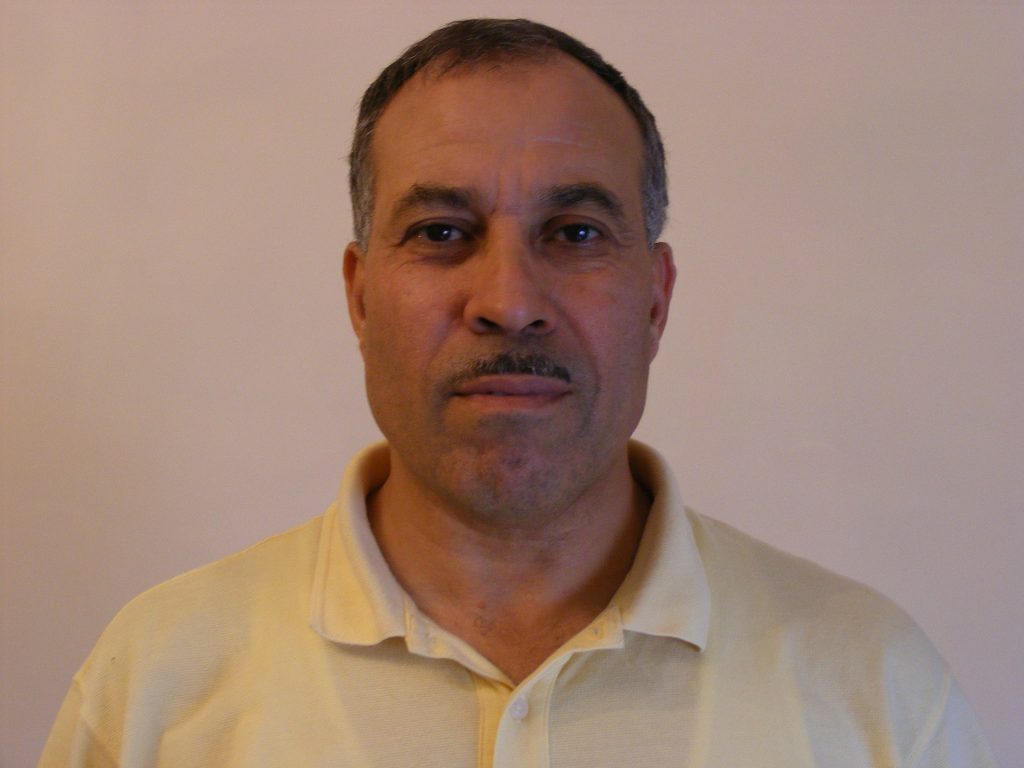
In the first part of the talk we review basic partial differential equations modeling wave propagation in acoustic and elastic media showing the exact solution. Then, we construct stable discontinuous Galerkin formulations for first order hyperbolic systems and introduce numerical fluxes. In the second part of the talk we discuss wave propagation in inhomogeneous media and present exact solutions with both p- and s-waves and associated interface (transmission) conditions. We finish by presenting a stable Petrov-Galerkin discontinuous finite element method for solving acoustic-acoustic, elastic-elastic and acoustic-elastic interface problems. We show numerical results for several examples to demonstrate the robustness and efficiency of the proposed method. We conclude with a list of few possible future extensions of this work. |
|
March 17, 2026, 1.30-3.00 pm
🔵 Join Zoom Slides |
"Finite sections: stability and the asymptotics of spectra" |
| Dr. Marko Lindner, Hamburg University of Technology | |

|
|
|
The stability of an approximating sequence $(A_n)$ for an operator $A$ usually requires, besides invertibility of $A$, the invertibility of further operators, say $B, C, ...$, that are well-associated to the sequence $(A_n)$. We study this set, $\{ A, B, C, ...\}$, of so-called stability indicators of $(A_n)$ and connect it to the asymptotics of $\Vert A_n \Vert$ and $\Vert A^{-1}_n \Vert$ as well as to spectral pollution by showing that $\lim \sup Spec_c(A_n) = Spec_c(A) \cup Spec_c(B) \cup Spec_c(C) \cup ...$. |
|
February 11, 2026, 1.30-3.00 pm
🔵 Join Zoom Slides |
"On Logarithmic p-Laplacian" |
| Dr. Firoj SK, Department of Mathematics, Indian Institute of Technology (IIT) Madras, Chennai, India | |

|
|
|
In this talk, we introduce and analyze the logarithmic p-Laplacian $L_{\Delta_p}$, a nonlocal operator of logarithmic order that arises as the formal derivative of the fractional p-Laplacian $(-\Delta_p)^s$ at $s=0$. This operator serves as a nonlinear extension of the recently developed logarithmic Laplacian operator. We present a variational framework to study Dirichlet problems involving $L_{\Delta_p}$ in bounded domains, which enables us to explore the relationship between the first Dirichlet eigenvalue and eigenfunction of both the fractional p-Laplacian and the logarithmic p-Laplacian. As a key result, we obtain a Faber–Krahn-type inequality for the first Dirichlet eigenvalue of $L_{\Delta_p}$. Additionally, we examine the validity of maximum and comparison principles, showing that these depend on the sign of the first Dirichlet eigenvalue of $L_{\Delta_p}$. If time permits, we discuss a boundary Hardy-type inequality for the spaces associated with the weak formulation of the logarithmic p-Laplacian. The talk is based on joint work with B. Dyda and S. Jarohs. |
|
January 28, 2026, 1.30-3.00 pm
🔵 Join Zoom Slides |
“Mathematical Modeling and Applications in Cellular Systems” |
| Prof. Fatma Zohra Nouri, Mathematical Modeling and Numerical Simulation Research Laboratory, Baadji Mokhtar University – Annaba - Algeria | |
|
|
|
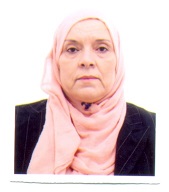
In this talk, we start by a review on mathematical modeling in experimental sciences, show how to derive, analyse and simulate mathematical models able to predict required useful results. The second part will focus on applications in modeling biological cell migration and proliferation. These models provide a mathematical framework to analyze and simulate the intricate dynamics of tumor growth, considering factors such as cell proliferation, angiogenesis, and interactions with the surrounding microenvironment. This can help to develop new therapies, design biomaterials, and engineer tissues for regenerative medicine. When the cell density is large enough, the continuous medium assumption is a good approximation and partial differential equations are suitable to model cell systems. |
|
January 7, 2026, 1.30-3.00 pm
🔵 Join Zoom Slides |
“The Banach Contraction Principle: Generalizations and Applications” |
| Prof. Mouffak Benchohra (Laboratory of Mathematics, Djillali Liabes University, Sidi Bel Abbes, Algeria) | |
|
|
|
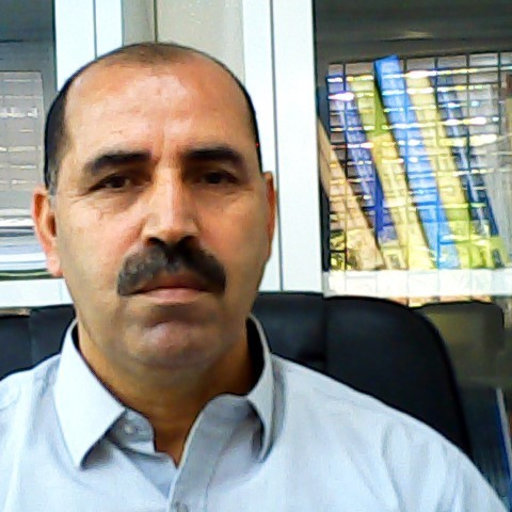
In this talk, we present a genesis of the Banach contraction principle, including its generalizations and applications. Selected References
|
|
December 14, 2025, 1.00-2.30 pm
🔵 Join Zoom Slides |
“New direction research for parabolic equations” |
| Prof. Hisao Fujita Yashima (NHSM, Algeria) | |
|
|
| In the first part, we recall classical methods for the study of partial differential equations, such as the method of characteristics for solving transport equation, the fundamental solution of heat equation, the principle of maximum, the solutions in Sobolev spaces, the estimation of the Holder continuity, the stochastic representation of the solution of a parabolic equation. We are going to see also a simple case of the convergence of the solution of a parabolic equation to the solution of a transport equation. In the second part, we illustrate the specific method of the new research orientation for parabolic equations that we propose. This method is based on the approximate solutions constructed by using the fundamental solution of the heat equation. The utility of this approach is that the approximation by these approximate solutions permits us to prove the convergence of the solution of parabolic equation to the solution of transport equation when the coefficient of diffusion tends to 0, as our intuition for physical phenomena of transport and diffusion suggests. We present some results obtained in this orientation of research and indicate what we can expect in the development of this research. |